
Debunking Winter Heating Myths for Killeen Property Portfolios
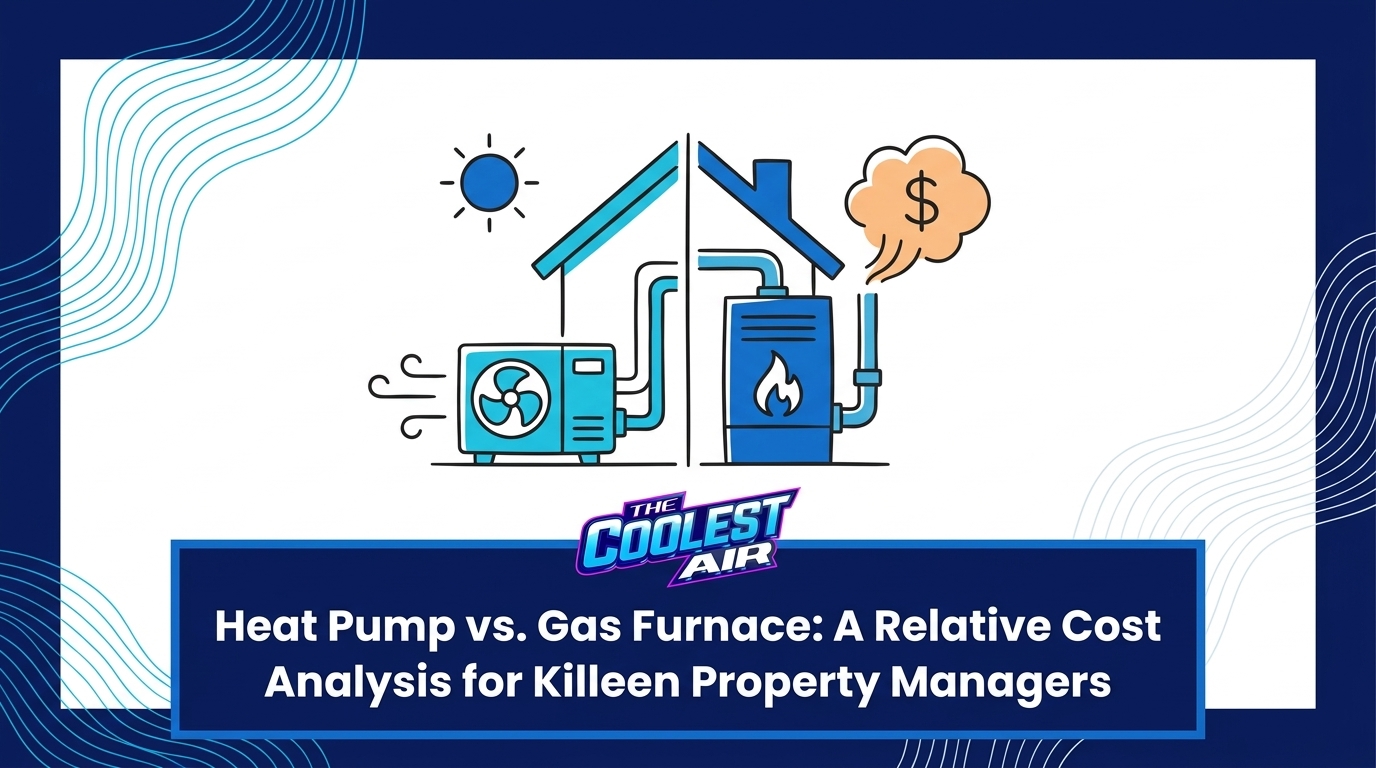
The biggest misconception in Central Texas real estate is that a property requires combustion heating to survive a winter freeze. If you operate under that old rule of thumb, you will likely be surprised by the Heat Pump vs. Gas Furnace: The Cost Analysis We Share With Killeen Property Managers. Many landlords assume that heat pumps struggle as soon as the temperature drops, but that outdated myth applies to extreme northern climates, not our region. The reality is that modern heat pump technology has evolved significantly, making it a highly reliable solution for mild southern winters.
Right now, as you schedule your October pre-winter heating startup across your portfolio, you are likely evaluating aging systems. You face a critical decision point: should you replace a failing gas furnace with another traditional furnace, or is it time to transition that rental unit to a heat pump system? Making this decision on a unit-by-unit basis without a portfolio-wide strategy often leads to mismatched equipment and unpredictable maintenance overhead.
System Standardization: Managing a diverse mix of aging heating systems creates logistical headaches for your maintenance team. Standardizing your approach before the first winter freeze hits gives you control over your operational budget. By looking closely at the relative costs, maintenance demands, and long-term efficiency of both options, landlords can make strategic choices that benefit their bottom line and keep their tenants comfortable all winter long.
How Central Texas Climate Shifts the Heating Equation
To understand the operational differences between these systems, you have to look at the geographical advantage of our specific climate. In Killeen, our average winter low temperatures typically hover in the mid-30s to low-40s. These temperatures rarely, if ever, reach the deep-freeze thresholds where modern heat pumps begin to lose their efficiency. This climate reality fundamentally shifts the heating equation in favor of streamlined, year-round systems.
The Mechanics of Heat Transfer: Heat pumps do not burn fuel to generate heat. Instead, they use a reversing valve and refrigerant lines to absorb ambient heat from the outside air and transfer it indoors. Because moving heat requires significantly less energy than creating it from scratch, heat pumps offer vastly superior relative energy efficiency in mild zones. Even when it feels cold outside to a tenant, a heat pump can still extract enough thermal energy to warm a Killeen multi-unit rental property effectively.
The Overkill of Combustion Heating: Contrast this with traditional gas furnaces. A gas furnace provides powerful, intense heat by burning fossil fuels. While this is necessary for a blizzard in the Midwest, it often exceeds the actual heating demands of a typical Texas winter. A furnace in our climate frequently short-cycles—turning on, blasting hot air, and shutting off rapidly—because it heats the space too quickly. This constant on-and-off cycling increases wear and tear on the unit’s internal components.
Aligning Equipment with Climate: Matching your HVAC infrastructure to the local climate reduces unnecessary mechanical stress. When a system operates smoothly and consistently rather than in short, aggressive bursts, it requires fewer mid-season repairs. For property managers, acknowledging our mild winter climate is the first step toward reducing ongoing operational expenses.
Relative Installation Investment vs. Long-Term Efficiency
When evaluating portfolio upgrades, property managers must balance the upfront capital expenditure against the long-term operational costs. While we do not focus on specific dollar amounts—since every property layout is unique—understanding the relative investment is crucial for your budgeting strategy.
A heat pump may represent a different initial capital investment compared to dropping a standard gas furnace into an existing closet. However, that initial investment often offsets future costs. Generic federal tax credits and local utility incentives may apply to qualifying high-efficiency heat pump installations, which can improve your relative return on investment. Property managers should always consult with their tax professionals to see how these generic incentives apply to multi-unit upgrades.
Furthermore, traditional gas furnaces require separate, independent air conditioning systems. If you install a furnace today, you are still on the hook for maintaining, repairing, and eventually replacing the outdoor AC unit later. A heat pump handles both heating and cooling in a single, unified system.
| Financial Factor | Heat Pump System | Gas Furnace + AC System |
|---|---|---|
| Initial Capital Investment | Consolidated investment for a unified heating and cooling system. | Split investment across two separate pieces of equipment with different lifespans. |
| Long-Term Energy Efficiency | Exceptional relative efficiency due to heat transfer technology. | Lower relative efficiency due to fuel combustion and potential short-cycling. |
| Incentive Eligibility | Often eligible for generic federal tax credits and energy efficiency rebates. | Fewer generic incentives available, depending on the specific efficiency rating. |
| Tenant Utility Appeal | Highly attractive to utility-conscious tenants looking for lower monthly overhead. | Standard appeal, though volatile winter gas prices can frustrate renters. |
By analyzing these long-term efficiency benefits, landlords can position their properties as modern and energy-efficient, which helps attract and retain quality tenants who care about their monthly utility overhead.

Maintenance Scalability: Reducing Mid-Winter Emergency Calls
For property managers handling dozens of units, maintenance scalability is the name of the game. Every emergency no-heat call during a holiday weekend eats into your profit margins and strains your maintenance staff. Comparing the maintenance requirements of these two systems reveals stark differences in how you manage your operational headaches.
Unified Systems vs. Split Systems: Managing a unified heat pump system means your technicians are dealing with one cohesive piece of equipment that handles both heating and cooling. You schedule a bi-annual check, and the entire system is serviced. Conversely, managing a gas furnace means you are also managing an independent AC unit. That requires tracking two separate maintenance schedules, stocking two different sets of replacement parts, and dealing with two completely different mechanical lifecycles.
Common Points of Failure: Combustion systems have specific, high-risk points of failure. Gas furnaces rely on igniters, flame sensors, burners, and heat exchangers. If a heat exchanger cracks, it is a major liability that requires immediate, extensive repair or full replacement. Heat pumps, being refrigerant-based, bypass combustion entirely. Their maintenance focuses on reversing valves, capacitors, and keeping the coils clean. A typical pattern we see is that standardizing your portfolio with heat pumps streamlines your vendor relationships, as technicians only need to source parts for one type of system.
Because of our deep consultative experience working directly with local property managers, we know that your ultimate goal is lowering portfolio-wide emergency calls. When you perform an October pre-winter heating startup on a standardized fleet of heat pumps, you eliminate the unpredictable variables associated with aging gas lines, dirty flame sensors, and pilot light failures, ensuring a quieter winter for your maintenance dispatch.
System Lifespan and Portfolio Replacement Strategy
Deciding when to patch an aging unit and when to initiate a full replacement is one of the toughest parts of property management. You cannot afford to replace every unit at once, but you also cannot afford to keep pouring capital into failing assets. Developing a strategic approach to evaluating your HVAC assets during fall inspections is critical.
- Evaluate Operational Lifespans: Heat pumps run year-round, handling both the brutal Texas summer and the mild winter. Because they never truly get an off-season, their functional lifespan requires diligent bi-annual maintenance to maximize longevity. Gas furnaces, on the other hand, sit idle for most of the year. While a furnace might technically last longer in terms of years, its companion AC unit is taking the brunt of the summer wear, meaning you will still face major replacements on a staggered timeline.
- Conduct Comprehensive Fall Audits: Use your October pre-winter heating startup as a data-gathering mission. Do not just turn the units on to see if they blow warm air. Track the age, repair history, and current condition of every unit in your portfolio. Identify which units are nearing the end of their functional life before they actually break down.
- Establish a Repair vs. Replace Threshold: Create a firm rule for your portfolio. If a repair costs more than a certain percentage of a new system, or if the unit has required multiple interventions in the past two years, it is time to upgrade. If you are unsure where to draw that line, choosing between heating repair and replacement requires a careful look at the unit’s history and efficiency ratings.
- Phase In Your Upgrades: Avoid massive, sudden capital expenditures by phasing in your upgrades. Target the oldest, most problematic gas furnaces first. Transitioning them to heat pumps one property at a time allows you to manage your budget effectively while steadily modernizing your infrastructure.
By treating your HVAC systems as a managed asset class rather than a series of isolated emergencies, you regain control over your property maintenance budget and improve the overall valuation of your portfolio.
Tenant Behavior and Operational Ease
Ultimately, the end-user of your HVAC system is the tenant. How they interact with the equipment directly impacts your property management experience. A system that is difficult to use, uncomfortable, or perceived as unsafe will generate complaints, negative reviews, and unnecessary service requests.
Gradual Warmth vs. Intense Blasts: There is a distinct difference in how these systems deliver heat. A gas furnace delivers intense, dry blasts of hot air. While this heats a room quickly, it often leads to temperature swings—the apartment gets too hot, the system shuts off, the apartment cools down, and the cycle repeats. A heat pump provides a much more consistent, gradual warmth. It maintains a steady indoor climate, which generally leads to fewer tenant complaints about feeling cold drafts or sudden hot spots.
Indoor Air Quality and Dryness: Combustion heating is notorious for drying out the indoor air. Tenants frequently complain about dry skin, static electricity, and irritated sinuses during the winter months when relying on a gas furnace. Because a heat pump does not use combustion, it does not dry out the air as aggressively, preserving better indoor air quality for your Killeen multi-unit rental properties.
Safety and Liability: From a liability standpoint, heat pumps offer significant peace of mind. Gas furnaces require proper venting and intact heat exchangers to exhaust carbon monoxide safely out of the building. If a flue gets blocked or a component cracks, it poses a serious safety risk to your tenants. Heat pumps eliminate the carbon monoxide risk entirely. There are no gas lines to inspect, no flues to maintain, and no combustion byproducts to worry about.
Educating Your Renters: To maximize operational ease, property managers should proactively educate tenants on optimal thermostat settings. Heat pumps operate best when set to a consistent temperature and left alone. Provide a simple, one-page guide to your renters explaining that cranking the thermostat up by ten degrees will not heat the apartment any faster, but it will cause unnecessary strain on the equipment.
Frequently Asked Questions: Heating Rental Properties in Texas
Which heating system is better for rental properties in Texas?
The best system depends heavily on your existing infrastructure, but heat pumps offer streamlined maintenance by combining heating and cooling into one unified system. For mild Texas climates, this eliminates the need to manage separate furnaces and AC units across your portfolio. They provide consistent comfort and simplify your vendor relationships.
Do heat pumps require more maintenance than gas furnaces?
Heat pumps run year-round and absolutely require bi-annual checks to maintain peak efficiency. However, they eliminate the need to maintain a separate AC unit and completely bypass the risks associated with combustion components like cracked heat exchangers. Overall, managing one unified system per unit is often more scalable for landlords.
Are heat pumps effective in mild Central Texas winters?
Yes, they are highly effective and efficient because our regional temperatures rarely drop below a heat pump’s optimal operating range. In Killeen, winter lows typically stay in the 30s and 40s, which is plenty warm enough for a heat pump to extract ambient thermal energy without needing to rely heavily on auxiliary heat strips.
Is a heat pump cheaper to run than a gas furnace?
Generally, heat pumps offer superior relative energy efficiency in mild climates because they transfer existing heat rather than consuming fossil fuels to generate new heat. This high efficiency rating often translates to lower monthly utility overhead, making the property highly attractive to prospective, utility-conscious tenants.
How do generic federal tax credits impact HVAC upgrades?
Qualifying high-efficiency systems may be eligible for generic federal incentives and local utility rebates, which can significantly offset the initial capital investment. Because tax laws and energy programs change frequently, property managers should always consult with their tax professionals to determine how these incentives apply specifically to multi-unit residential portfolios.
Finalizing Your Fall HVAC Strategy
The choice between sticking with a traditional gas furnace or upgrading to a modern heat pump ultimately comes down to balancing your upfront capital investment with long-term maintenance scalability. As you manage your October pre-winter heating startup, take the time to evaluate the true operational cost of maintaining aging, mismatched equipment across your properties.
Finalizing your portfolio decisions before seasonal temperatures drop ensures that your maintenance team is prepared and your tenants remain comfortable. Partnering with a local B2B expert allows you to assess the specific needs of your buildings and develop a phased, strategic upgrade plan. If you are ready to reduce emergency calls and streamline your property management operations, reach out to our team today to discuss the most effective replacement strategies for your rental portfolio.